

Energy Efficient Windows
Energy‑Efficient Windows in St. Louis: Comfort, Savings, No‑Pressure Help
Dealing with chilly January drafts and stuffy July afternoons? The right energy‑efficient windows can fix that fast—without a pushy sales pitch. Expect:
- Steadier indoor temperatures from room to room
- Fewer drafts and cold spots near windows
- Lower energy use from improved insulation and air sealing
- Better UV protection to help reduce fading of floors and furniture
- A quieter, more comfortable home

Viviano Window & Door is a family‑owned, low‑pressure dealer—never a “one‑call‑close” operation. Our value pricing follows our philosophy: The Intersection of Price and Quality®. We recommend products based on your home and goals (not a single manufacturer), with trusted lines like Sunrise and Polaris available.
We’ll help you compare options with confidence. Our team knows ENERGY STAR criteria and how to read the NFRC label, so you can quickly understand U‑Factor, SHGC, and other ratings before you decide. You’ll get clear guidance, side‑by‑side product comparisons, and a written quote—no obligation and no time‑sensitive gimmicks.
Ready to explore the best fit for your home? Request a free, no‑pressure estimate, call 314‑353‑8350, or stop by our showroom at 7530 Watson Rd, Shrewsbury (Mon–Fri, 8–4). Ask about financing and phased projects if you’d like to spread out the investment.
St. Louis swings from humid, sunny summers to sudden winter cold snaps. That makes your glass package, coatings, and frame choice matter even more here. For example:
- Choose Low‑E glass tuned to reduce summer heat gain on west/south windows while keeping winter warmth in.
- Improve insulation with argon gas fills, warm‑edge spacers, and tight, well‑insulated frames.
- Get the right installation method (insert vs. full‑frame) and pro air‑sealing to eliminate drafts.
Tell us your comfort goals and budget—we’ll tailor an energy‑efficient solution that feels right and pays you back in comfort and savings.
Why Window Efficiency Matters in St. Louis
St. Louis is a mixed climate: hot, sunny, humid summers followed by chilly winters and the occasional sharp cold snap. Windows do two jobs here: block excess summer heat from coming in and keep winter heat from leaking out. If they fall short, you get rooms that swing from stuffy to drafty, higher utility bills, and UV fading on floors and furniture. If any of this sounds familiar, a quick, no‑pressure assessment can show exactly where efficiency is leaking—and what will make the biggest difference for your home and budget.
Some parts of a home work harder. South‑ and west‑facing windows take the brunt of afternoon sun and can overheat living rooms and kitchens without solar‑control glass. Large picture windows and patio doors move a lot of energy simply because of their size, so they need the right coatings and tight seals. Many older St. Louis homes still have single‑pane or leaky double‑hung windows with worn weatherstripping, which leads to constant drafts and condensation. We’ll match glass packages and frame options by orientation and room use—so you get comfort where you need it, without overpaying where you don’t. Want tailored recommendations? Call 314‑353‑8350 for a friendly, free estimate.
Use the NFRC performance label to choose well for our region:
- U‑Factor: how well a window keeps heat inside. Lower is better for winter comfort and year‑round efficiency.
- SHGC (Solar Heat Gain Coefficient): how much solar heat the glass lets in. Lower helps tame our strong summer sun, especially on south and west elevations.
- Air Leakage: lower numbers mean fewer drafts. Installation quality also matters here.
Bring any label or quote by our showroom and we’ll translate the numbers into real‑world comfort and cost.
Features that tend to help in St. Louis include Low‑E glass for UV and heat control, dual‑ or triple‑pane insulated glass with argon gas, warm‑edge spacers, and frames that seal tightly. We work with multiple trusted brands (including Sunrise and Polaris) to hit the sweet spot between performance and price—The Intersection of Price and Quality. Stop by 7530 Watson Rd, Mon–Fri 8–4, or request your free quote today and we’ll help you compare options without the sales pressure.
What Makes a Window Energy Efficient
Energy efficiency is a system. Glass, gas, spacer, frame, and installation must work together to keep St. Louis homes comfortable through humid summers, sunny afternoons, and winter cold snaps. If you’re comparing options, we’ll walk you through the best mix for your home and budget—no pushy sales tactics, just clear choices.
- Low‑E coatings
Thin, invisible layers on the glass reflect heat back to where it came from. That keeps warmth inside in winter and pushes much of the sun’s heat outside in summer. They also block a large share of UV light to help protect floors, furniture, and artwork, especially on south and west sides. Tell us which rooms run hot or cold—we’ll match the Low‑E to each elevation so you get comfort where you need it most. - Dual vs. triple‑pane insulated glass
Two panes create an insulated airspace that cuts heat loss and reduces drafts near the window. A third pane adds another barrier for better insulation and a quieter home. Most homeowners do well with high‑performance dual‑pane. Triple‑pane is a good fit for large openings or rooms where you want very stable temperatures. During your free, no‑pressure estimate, we’ll price both so you can see the comfort and cost trade‑offs side by side. See our comparison. - Argon or krypton gas fills
Inert gas between panes slows heat transfer better than air. Argon is the most common and cost‑effective choice. Krypton is denser and used in some tighter triple‑pane packages. Both help rooms stay closer to the thermostat setting with fewer hot and cold spots by the glass. We’ll recommend krypton only where it truly adds value—otherwise, argon keeps performance high and pricing fair. Learn more. - Warm‑edge spacers
The spacer keeps panes evenly separated around the glass perimeter. Warm‑edge designs, often stainless steel or composite, reduce heat loss at the edge, which helps limit interior condensation in winter and improves comfort near the window. Ask us to show you cut‑away samples at our Shrewsbury showroom so you can see (and feel) the difference. Glass options explained. - Tight frames and weatherstripping
Well‑designed frames and quality seals limit air leakage, a hidden energy waster. Multi‑chambered vinyl frames and strong compression weatherstripping help stop drafts and keep conditioned air inside. Styles that lock against compression seals, like casements, typically leak less air than sliders. Not sure which style fits your goals? We’ll help you balance airflow, views, and efficiency. Compare frame materials. - Professional installation and sealing
Even the best window underperforms if it isn’t measured, fitted, and sealed correctly. Proper flashing, insulation around the frame, and air and water sealing tie the new unit into your home’s envelope to prevent leaks and energy loss. Our low‑pressure approach focuses on the right installation method for your opening, insert/pocket or full‑frame, so the window you buy delivers the comfort and efficiency you expect. How we prevent leaks. Schedule a free in‑home assessment and we’ll confirm the right approach, explain lead‑safe practices when required, and provide a clear written quote.
Ready to see your options and pricing? Call 314‑353‑8350, request a free quote, or stop by 7530 Watson Rd, Shrewsbury (Mon–Fri, 8–4).
Choosing the Right Glass Package: Double vs. Triple Pane, Low‑E, and Gas Fills
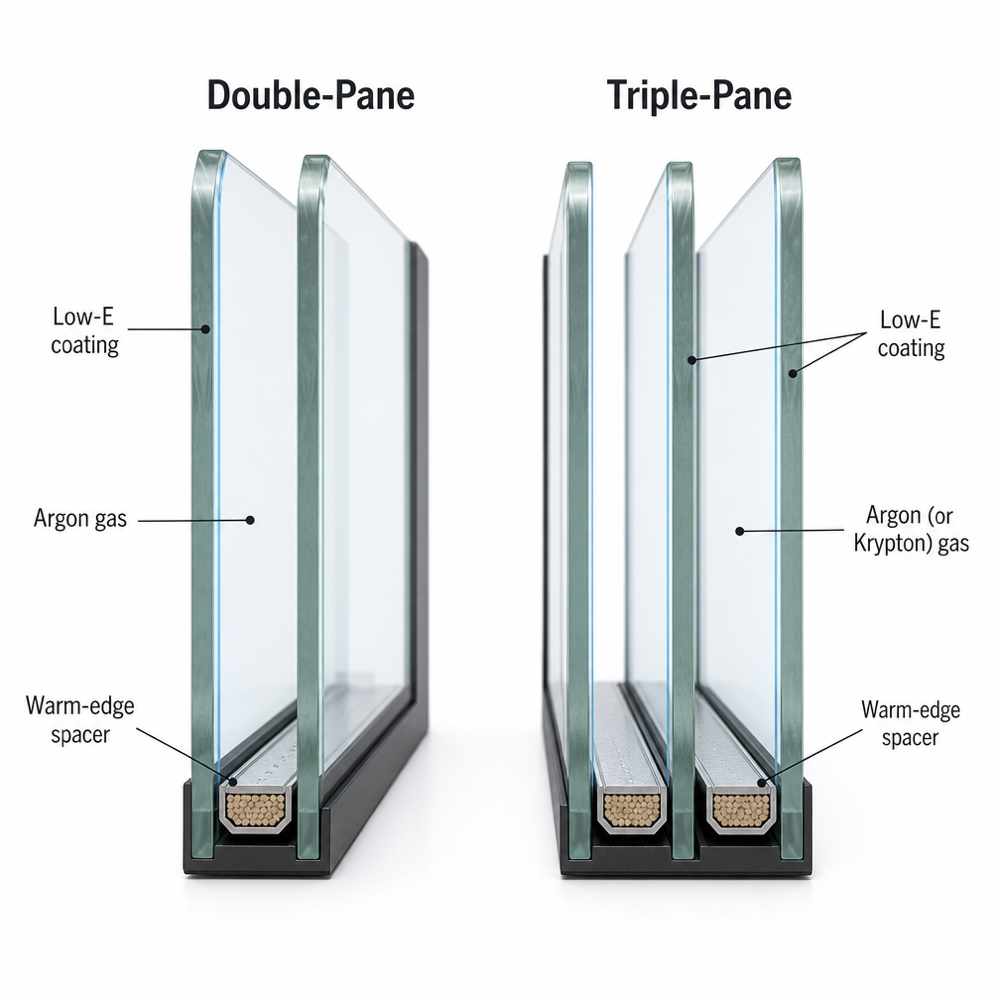
Glass does most of the work in a window’s energy performance. In St. Louis, where summers are hot and sunny and winters can turn cold fast, the right package depends on orientation, comfort goals, and budget. If you’d like, we’ll map your home’s sun exposures and price out a couple of glass options side‑by‑side so you can see what pays off. For a deeper dive, see Replacement Window Glass Options Explained.
Double‑pane vs. triple‑pane
- Choose double‑pane when:
- You want the best value for most rooms. A quality double‑pane unit with advanced Low‑E and argon performs well year‑round here.
- Noise is typical street level. For major noise, laminated glass or mixed glass thickness often helps more than adding a third pane. See how windows impact noise.
- Window sizes are large. Double‑pane keeps sash weight down, which makes operation easier and can expand size options.
- Consider triple‑pane when:
- Comfort is a top priority in cold‑feeling rooms, such as north‑facing bedrooms or large openings.
- Big west or south windows overheat. Triple‑pane paired with solar‑control Low‑E cuts summer heat gain more aggressively.
- You want the lowest possible U‑factors for stricter goals or incentives.
- You want a bit more sound reduction. The extra layer and air space can help, though laminated or mixed‑thickness glass is usually better for serious noise.
Not sure which mix makes sense? Many homes do best with double‑pane in most rooms and targeted triple‑pane on the hottest or coldest elevations—we’ll price both so you can choose with confidence. Double vs. triple‑pane guide.
Low‑E coatings by orientation
- South and west exposures that run hot: Use a solar‑control Low‑E with a lower SHGC to block more summer heat and reduce AC load, with strong UV protection to limit fading.
- South windows with good roof overhangs: A balanced or slightly higher‑SHGC “passive” Low‑E can welcome winter sun while the overhang shades summer peaks.
- North and east exposures: An all‑purpose Low‑E prioritizes heat retention and comfort without darkening the room.
Argon vs. krypton gas fills
- Argon: The go‑to for most double‑ and triple‑pane packages. It’s abundant, cost‑effective, and matches common air‑space sizes.
- Krypton: Better insulation in very narrow cavities, often in select triple‑pane units, but costs more. We reserve it for specialty cases where we’re targeting very low U‑factors or working with thin air spaces.
See our detailed comparison of argon vs. krypton.
Weight, cost, and installation considerations of triple‑pane
- Weight and hardware: Triple‑pane sashes are heavier. Quality lines use stronger balances and hardware, but maximum sizes may be smaller than double‑pane.
- Cost: Expect a premium over comparable double‑pane. Many homeowners find high‑performance double‑pane with the right Low‑E on key elevations delivers most benefits at a lower cost.
- Installation: Heavier units need careful handling, shimming, and sealing. Our installers plan for this, which can add some time to set each unit correctly. See how we prevent leaks and water intrusion.
Want to compare the numbers? We’ll show U‑factor/SHGC differences and total project pricing, then let you decide—no pressure.
Frame Materials We Recommend (Across Multiple Brands)
The frame you choose plays a big role in efficiency, draft reduction, and longevity. We help you compare materials side by side so you get the right balance of insulation, durability, and style. Composite vs. vinyl vs. fiberglass vs. wood.
- Vinyl (uPVC): Multi‑chambered, welded vinyl frames insulate very well and keep conditioned air where it belongs. They won’t rot, peel, or need repainting, and they handle St. Louis heat and cold with little upkeep. Foam‑enhanced options can boost thermal performance for tougher exposures.
- Fiberglass: Very stable through temperature swings, fiberglass expands and contracts at a rate close to glass. That helps seals stay tight, reducing air leakage. It’s strong and long‑lasting, often with slimmer profiles and factory finishes.
- Composites: Blended materials deliver wood‑like strength with low maintenance. They handle darker exterior colors well, resist warping, and perform consistently season after season.
Low maintenance and more than just white
- Go beyond white and beige with factory colors like black, bronze, and deep earth tones, plus two‑tone looks.
- Interior options can include realistic woodgrains for a warm look without real‑wood upkeep.
- Advanced finishes resist fading and chalking for lasting curb appeal.
Multiple brands, one goal: the best fit for you. We’re a dealer, not a one‑brand shop, so we recommend the frame material and line that match your priorities, including budget, style, and energy targets. We source from several respected manufacturers, including options from Sunrise and Polaris, and we’ll show you how each line performs in the real world.
U.S.‑made choices available. If “Made in the USA” matters to you, let us know. Many of the window lines we carry are manufactured in the U.S. For longevity insights, see Which Window Frame Material Lasts the Longest? and for easy upkeep, Best Low‑Maintenance Window Materials.
Energy Ratings Decoded: NFRC Label and ENERGY STAR for Our Region
When you’re comparing windows, the NFRC label is the apples‑to‑apples scorecard. It’s an independent test of the whole window, including glass, spacer, frame, and sash, not just the center of the glass. Bring any label (or a photo of it) to our showroom or your free in‑home estimate—we’ll decode it in minutes so you can feel confident you’re getting the right performance for your home and budget.

What the NFRC label shows
- U‑Factor: How well the window insulates. Lower is better.
- SHGC (Solar Heat Gain Coefficient): How much of the sun’s heat gets through. Lower blocks more solar heat, higher lets in more.
- VT (Visible Transmittance): How much natural light passes through. Higher means brighter interiors.
- AL (Air Leakage): How much air can pass through the assembly. Lower means fewer drafts.
Plain‑English targets for St. Louis homes
- U‑Factor: Aim low. Many efficient replacement packages we sell land in the 0.20s to 0.30s.
- SHGC: Choose by orientation and shading. Lower on south/west to reduce overheating; moderate on north/east for comfortable daylight.
- VT: Balance light and glare. Pair with SHGC that manages heat on sunny sides.
- AL: Lower is better. Tighter‑sealing styles and quality installation keep AL down.
ENERGY STAR basics
- ENERGY STAR certified windows meet EPA/DOE performance criteria verified through NFRC testing.
- Two certified windows can be optimized differently. We match glass packages to your home’s exposures so you don’t pay for performance you don’t need.
A realistic note on savings: labels help you compare, but real‑world results depend on your home’s insulation, window size and orientation, HVAC, and installation quality. Our process focuses on accurate measurement and careful air‑sealing, not sales tactics.
Styles and Efficiency: Which Windows Seal Best
Fixed picture windows
- Most efficient since there are no moving sashes or seals to wear.
- Great for views and light without added drafts; pair with operable units nearby for ventilation.
Casement and awning windows
- Hinged sashes pull tight against compression seals when locked, creating excellent air‑ and water‑tight seals.
- Good choice for windy sides and drafty rooms. Awnings shed rain while ventilating.
Double‑hung and sliding windows
- Classic looks and easy operation with modern interlocks and weatherstripping to curb drafts.
- Ask for the Air Leakage (AL) number—lower is better.
Specialty shapes, bay/bow windows, and patio/french/slider doors
- Fixed specialty shapes are efficient like picture windows.
- Bay/bow units add glass area and joints—prioritize insulated boards, sealed mullions, and proper flashing.
- Patio sliders rely on interlocks and multiple weatherstrips; hinged and French doors use compression gaskets and multi‑point locks.
Installation Matters: How We Prevent Leaks, Drafts, and Callbacks
Accurate measurements and fit
- We measure inside and out, check for out‑of‑square openings, hidden rot, and wall thickness to recommend insert/pocket or full‑frame.
Why accurate measurements matter before you order
Shimming, fastening, and alignment
- Shimming at load and lock points prevents frame bowing; correct fastening keeps reveals even and operation smooth.
Water management and air sealing

- Sloped sill pans or flashing tapes at sills; self‑adhered flashing at jambs/heads; drip caps where exposed.
- Two‑part seal: low‑expansion foam in the cavity plus high‑performance exterior and interior sealants.
How window installers prevent leaks and water intrusion
Lead‑safe, clean, and careful in older homes
- For homes built before 1978, we follow EPA Lead‑Safe (RRP) practices with proper containment and cleanup.
Protection of your home
- We cover floors/furniture, wear shoe covers, and leave a tidy job site with a final walkthrough.
Handled the right way, your windows deliver the comfort and efficiency you expect. See current specials and financing options, then schedule your free, no‑pressure estimate or call 314‑353‑8350.
Savings, Incentives, Financing, and Warranties
Energy‑efficient windows deliver two kinds of value: comfort you can feel and reduced energy use. Actual bill savings vary by home; window count and size, sun exposure, insulation, and the glass package all matter. During your estimate, we’ll help you right‑size the options so you’re not over‑ or under‑buying.
Federal tax credit
- Many ENERGY STAR certified replacement windows qualify for the Energy Efficient Home Improvement Credit: up to 30% of the product cost (installation labor excluded), capped at $600 per year, available through 2032.
- We’ll flag qualifying products and provide documentation; confirm eligibility with your tax advisor.
Local rebates
- Local utilities sometimes offer incentives on qualifying high‑performance windows. Programs change; we’ll help you check current offers and match products to requirements.
Financing and simple ways to pay
- Financing options with approved credit to spread out project cost, plus straightforward payment methods.
- We can present good/better/best options with clear monthly estimates.
Warranties and service support
- Manufacturer warranties commonly cover insulated glass units, frames, and hardware (terms vary).
- Viviano helps with registration, paperwork, and any warranty service. One local call does it.
Real Results Around St. Louis
- Webster Groves, 1920s brick Tudor: Replaced large picture and flanking units with a picture‑plus‑casement setup using solar‑control Low‑E and argon. Result: steadier temps on hot days, better UV protection, and a quieter room.
- Tower Grove South, 1925 bungalow: Upgraded drafty bedrooms to Polaris double‑hung replacements with insulated frames and Low‑E/argon; full‑frame install addressed gaps. Result: draft‑free comfort and easy cleaning without losing the original trim look.
- Kirkwood, mid‑century ranch: Replaced older patio door with an energy‑efficient sliding door featuring UV‑blocking Low‑E and warm‑edge spacers. Result: less fading, better summer comfort, bright natural light maintained.
Want to see more? Browse our Galleries and Our Work, or stop by our showroom at 7530 Watson Rd, Shrewsbury, MO 63119 (Mon–Fri, 8:00–4:00).
Why Homeowners Choose Viviano Window & Door
Homeowners choose Viviano Window & Door because we pair real value with clear guidance. We’re a family‑owned, locally operated dealer that has served the St. Louis area for more than 28 years. You get recommendations grounded in our climate, codes, and neighborhoods, not a national script—so you can make a confident, informed choice. Learn more about us.
- Low‑pressure consultations: We don’t use commissioned, one‑call‑close tactics. We listen, measure carefully, and provide a clear, written quote you can review on your timeline.
- Multi‑brand selection: Because we’re a dealer, not tied to a single manufacturer, we match products to your goals and budget, including lines like Sunrise and Polaris.
- Honest pricing: We keep overhead low and focus on “The Intersection of Price and Quality®,” putting more of your money into your windows and less into advertising.
Visit our showroom at 7530 Watson Rd, Shrewsbury, MO 63119. Hours: Monday–Friday, 8:00 a.m.–4:00 p.m.; closed Saturday and Sunday. Prefer to chat first? Call 314‑353‑8350 or request a free quote online.
Helpful Resources and FAQs
What U‑Factor and SHGC should I look for here?
In the St. Louis area’s mixed climate, a lower U‑Factor keeps heat inside in winter and outside in summer. A practical target for many homes is roughly 0.20 to 0.28 (lower is better). For solar control, look at SHGC. South‑ and west‑facing rooms that overheat in summer usually do best with a lower SHGC around 0.25 to 0.35. North‑ and east‑facing windows can often use a slightly higher SHGC, up to about 0.40. We’ll also check Air Leakage (AL)—the tighter the better.
Do I need triple‑pane or is double‑pane enough?
High‑performance double‑pane glass with Low‑E and argon is enough for many St. Louis homes. Triple‑pane can be worth it for big west or south exposures, street noise, or if you want the very lowest U‑factors and the most consistent temperatures. We’ll price both so you can decide.
How much can I realistically save on energy bills?
Savings depend on what you’re replacing and how drafty your openings are today. Replacing old single‑pane or leaky double‑pane windows often delivers noticeable reductions in heating and cooling use, plus fewer drafts and hot/cold spots. We can estimate your likely range during a free visit.
What is Low‑E glass and why does it matter?
Low‑E is a thin, transparent coating on the glass that reflects heat energy—keeping solar heat out in summer and warmth in during winter—while blocking a significant portion of UV light to help prevent fading.
- Double‑Pane vs. Triple‑Pane Windows: Which Should You Choose?
- Argon vs. Krypton Gas in Windows: What’s the Difference?
- Replacement Window Glass Options Explained for Homeowners
- How Window Installers Prevent Leaks and Water Intrusion
- Full‑Frame vs. Insert Replacement Windows
- Do Replacement Windows Reduce Outside Noise?
Get a Free, No‑Pressure Estimate
Ready to compare energy‑efficient window options without the sales pressure? As a family‑owned dealer, we’ll recommend what fits your home and budget—not one manufacturer—and we never use one‑call‑close tactics. You’ll get clear, line‑item pricing and straightforward answers so you can decide with confidence.
- Schedule an in‑home visit: We’ll measure, talk through styles and glass options, and tailor recommendations. No obligation.
- Visit our showroom: 7530 Watson Rd, Shrewsbury, MO 63119. Hours: Mon–Fri, 8:00 a.m.–4:00 p.m. See colors, glass packages, and hardware in person—walk‑ins welcome.
- Start online: Share photos and rough sizes, and we’ll follow up with a no‑pressure estimate and side‑by‑side options.
Have questions about current specials or brand options like Sunrise and Polaris, or want to ask about financing? Call for complete details.
Request Estimate See Specials or call 314‑353‑8350—no pressure, just straight answers and a fast path to pricing.