
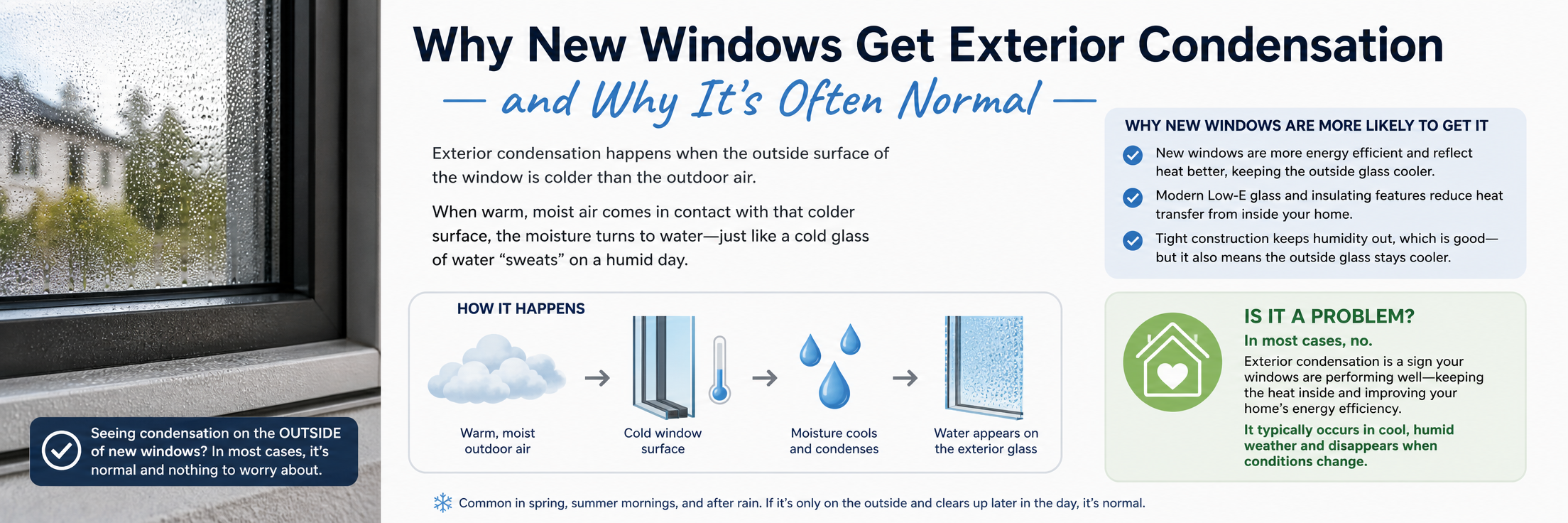
Understanding Exterior Condensation on New Windows
When homeowners install new windows, one unexpected phenomenon they often notice is condensation forming on the exterior surfaces. At first glance, this moisture might seem like a defect or sign of poor installation, but in many cases, it is a normal occurrence. This article explores why new windows get exterior condensation and explains why this phenomenon is often a positive indicator of a window’s performance rather than a problem.
What Is Exterior Condensation?
Condensation happens when water vapor in the air turns into liquid water after contacting a surface that is cooler than the dew point temperature. Exterior condensation refers specifically to moisture forming on the outside glass surface of windows.
Why New Windows Are More Likely to Have Exterior Condensation
New replacement windows typically feature highly energy-efficient glass technology, including insulated glass units (IGUs) with Low-E coatings and better frame materials. While these features improve indoor comfort and reduce energy bills, they also cause the outside glass surface to cool significantly on certain nights.
Here’s why:
- Improved Energy Efficiency: New windows reduce heat transfer through the glass, so on cool, clear nights, the window surface radiates its heat to the open sky.
- Cooler Exterior Glass Surface: This heat loss cools the outside pane below the ambient air temperature and even the dew point, causing moisture from outside humid air to condense on the glass.
- Double or Triple Panes: Modern windows often have multiple glass panes. The outer pane can become cooler than older single-pane windows, increasing likelihood of exterior condensation.
- New Window Insulation and Coatings: Low-E coatings and gas fills (argon or krypton) contribute to better thermal performance, lowering exterior glass temperature overnight.
Common Factors That Increase Exterior Condensation
- Clear skies at night allowing more radiant heat loss
- Calm or low wind conditions
- High outdoor humidity levels
- Windows facing open areas without obstruction
- New energy-efficient window models, especially vinyl or fiberglass frames
Why Exterior Condensation Is Often a Good Sign
Although condensation on windows might seem undesirable, exterior condensation on new replacement windows is often a sign that the window is performing as intended. Here’s why:
“Exterior condensation generally means your new windows are doing a great job insulating your home’s interior from outdoor temperature fluctuations.”
- Superior Insulation: The condensation on the outside indicates the interior pane remains warm and that heat is not escaping through the window.
- Energy Savings: Properly insulated windows that show exterior condensation help maintain indoor comfort and reduce heating costs.
- Lack of Interior Condensation: Moisture forming on the inside of windows is usually a sign of excess indoor humidity or window seal problems, which is not the case here.
How to Manage and Understand Exterior Condensation
What Homeowners Should Know
Understanding when exterior condensation is normal and when it could be a concern is essential for every homeowner with new windows.
- If condensation only appears on the outside of the glass and disappears shortly after the sun rises or when the outdoor temperature increases, it is generally harmless.
- Persistent moisture on the exterior that leads to damage (like mold on siding) may require minor maintenance or improved drainage around the home.
- Condensation between panes (inside the sealed glass unit) is a sign of window failure and should be inspected for potential replacement or repair.
- Proper ventilation inside the house can further reduce the chance of troublesome condensation problems.
Tips to Minimize Exterior Condensation Effects
- Keep gutters and exterior drainage clean to prevent moisture accumulation around windows.
- Trim back any plants or landscaping close to windows that trap moisture.
- Ensure proper attic and eave ventilation to lower overall humidity near the home exterior.
- Enjoy the energy savings and peace of mind that come from having high-performance new windows!
When to Call a Professional
If you notice excessive or persistent moisture that causes damage or suspect your new windows have issues like seal failure, it’s wise to seek expert help. Professional window companies can inspect your installation, provide window repair or replacement services, and recommend the best solutions for your home’s needs.
Conclusion
Exterior condensation on new windows is a common and often positive indicator that your windows are energy-efficient and functioning properly. By understanding the science behind this phenomenon and maintaining good exterior care, you can enjoy the benefits of your investment and avoid unnecessary concerns.
For more detailed information on window installation options and services, Viviano Inc. provides expert guidance and quality craftsmanship to help you select and maintain the perfect windows for your home.