
When it comes to upgrading your home’s windows, understanding the differences between replacement windows and new-construction windows is crucial. Both options come with their own set of advantages, installation methods, and costs. This comprehensive guide will help you make an informed decision based on your home’s needs, budget, and aesthetic preferences.
Understanding the Basics
What Are Replacement Windows?
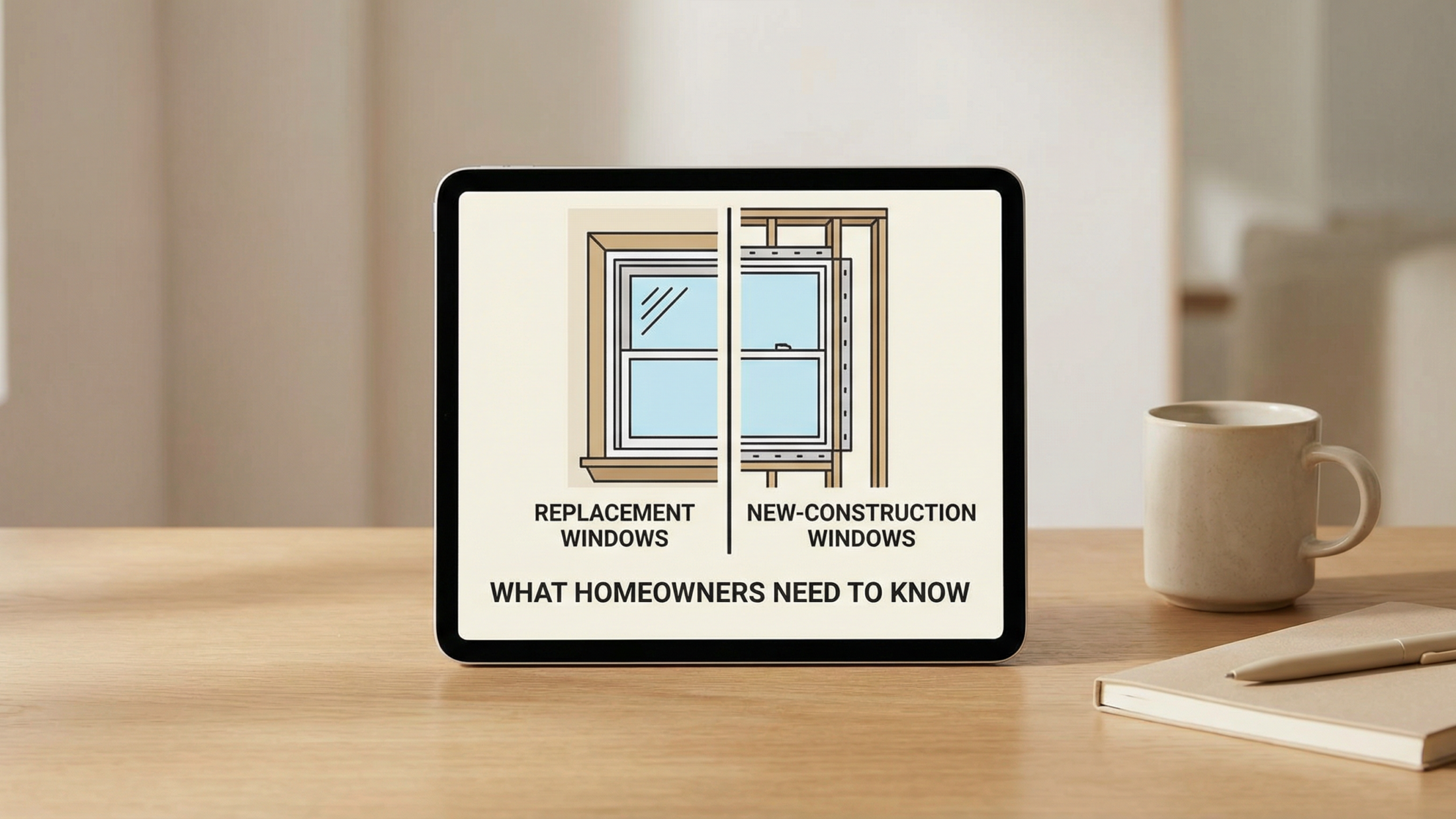
Replacement windows, often called insert windows, are designed to fit into the existing window frame. They are installed by removing the old window sashes and keeping the existing frame intact. These windows are ideal when the frame is still in good condition but the glass, sashes, or hardware need updating.
What Are New-Construction Windows?
New-construction windows, sometimes referred to as “full-frame” windows, are installed during new builds or when the entire window frame and trim need to be replaced. This type involves removing the whole window unit, including the frame, allowing for a completely new window to be installed.

Key Differences Between Replacement and New-Construction Windows
1. Installation Process
The installation technique is the primary difference between replacement and new-construction windows:
- Replacement Windows: Inserted into the existing frame; less invasive installation.
- New-Construction Windows: Entire frame and window unit replaced; requires more construction work.
3. Structural Condition of Your Home
If the existing frames are damaged, rotted, or structurally unsound, new-construction windows are the better choice. Replacement windows work best when frames are solid and stable.
4. Energy Efficiency
Both window types can be equally energy-efficient if you choose high-quality products with modern insulating features like double or triple glazing, low-E coatings, and proper sealing. However, new-construction windows often allow for better insulation around the frame since the builder can seal and insulate during installation.
When to Choose Replacement Windows
- Your window frames are in good shape with no signs of rot or water damage.
- You want to improve window performance and appearance without major construction.
- You aim to save on installation costs and minimize disruption to your home.
- You are renovating and want to keep your home’s existing trim and siding intact.
When to Choose New-Construction Windows
- You’re undertaking major remodeling or building a new home.
- Your existing window frames are damaged, warped, or have extensive water damage.
- You want to replace the entire window unit including the frame for a fresh start.
- You require a customized window size or style that doesn’t fit the existing frame.
Pros and Cons: Replacement Windows vs. New-Construction Windows
Replacement Windows
- Pros: Lower cost; quicker installation; less home disturbance; keeps existing trim and siding.
- Cons: Limited to the existing frame size and shape; cannot address structural issues; potential for reduced energy efficiency if frame is compromised.
New-Construction Windows
- Pros: Allows for fixing structural and framing problems; fully customizable sizes and styles; improved insulation opportunities.
- Cons: Higher cost due to labor and materials; more time-consuming installation; potential disruption to home exterior and interior finishes.
Materials and Styles Matter
Regardless of the window type, material selection is also critical. Common materials include:
- Vinyl: Affordable, low-maintenance, and energy-efficient.
- Wood: Classic appearance, good insulator but higher maintenance.
- Fiberglass: Durable, energy efficient, and low maintenance.
- Aluminum: Strong and lightweight but less energy efficient.
Window style choices, such as double-hung, casement, sliding, or picture windows, should complement your home’s architecture and meet your ventilation and light preferences.
What Homeowners Should Ask Before Buying
“Choosing the right window isn’t just about looks; it’s about making an investment in comfort, energy savings, and home value.” – Window Industry Expert
- What is the condition of my existing window frames?
- Do I want to preserve the current exterior and interior finishes?
- What are my goals for energy efficiency?
- Are there any structural or water damage issues that need addressing?
- What is my budget including installation costs?
Installation Tips and Considerations
Window installation quality can significantly impact the performance and lifespan of your new or replacement windows. Here are tips to ensure a proper installation:
- Hire licensed and experienced installers familiar with both replacement and new-construction window techniques.
- Ensure proper weatherproofing and air sealing to prevent drafts and moisture infiltration.
- Verify that windows are square and level to ensure smooth operation and optimal energy efficiency.
- Follow manufacturer guidelines and local building codes for installation practices.
Conclusion
Choosing between replacement windows and new-construction windows largely depends on the condition of your current windows, your budget, and your remodeling goals. Replacement windows offer an economical, low-disruption solution when frames are sound, while new-construction windows provide a comprehensive upgrade when addressing structural issues or when designing a brand-new window installation.
Understanding the distinctions and asking the right questions will help you select windows that improve comfort, add value to your home, and enhance curb appeal for years to come.