
Introduction
Ultraviolet (UV) radiation from sunlight is one of the main factors that causes fading and deterioration of interior furnishings and flooring. Over time, exposure to UV rays can degrade carpets, hardwood floors, upholstery, curtains, and artwork, leading to costly replacements and repairs. Fortunately, advances in window technology have introduced new solutions designed to significantly reduce UV damage inside homes and commercial spaces. In this article, we will explore how modern windows help protect floors and furniture from UV damage, the science behind their effectiveness, and tips for selecting the right windows for ultimate interior protection.
How UV Radiation Damages Interiors
UV radiation is part of the sunlight spectrum invisible to the naked eye but highly energetic. It penetrates glass and causes chemical changes in materials, leading to:
- Fading of colors and fabrics due to the breakdown of dyes and pigments
- Weakening of wood fibers causing brittleness and cracks
- Degradation of finishes and varnishes on floors and furniture
- Yellowing or discoloration of plastics and leather materials
These effects accumulate gradually but become irreversible, demanding frequent replacement or refinishing. Since sunlight streams through windows daily, they serve as the primary entry point for UV radiation indoors.
The Role of Windows in UV Protection
Most traditional windows provide some level of UV protection but are not sufficient to stop the majority of harmful rays. Standard clear glass typically blocks only a fraction of UVB rays (which cause sunburn), while allowing a substantial amount of UVA rays through. UVA rays are especially damaging as they penetrate deeper into materials.
New window technologies have been developed to enhance UV blocking while still permitting natural visible light to illuminate interiors. These technologies fall under three main categories:
1. Laminated Glass
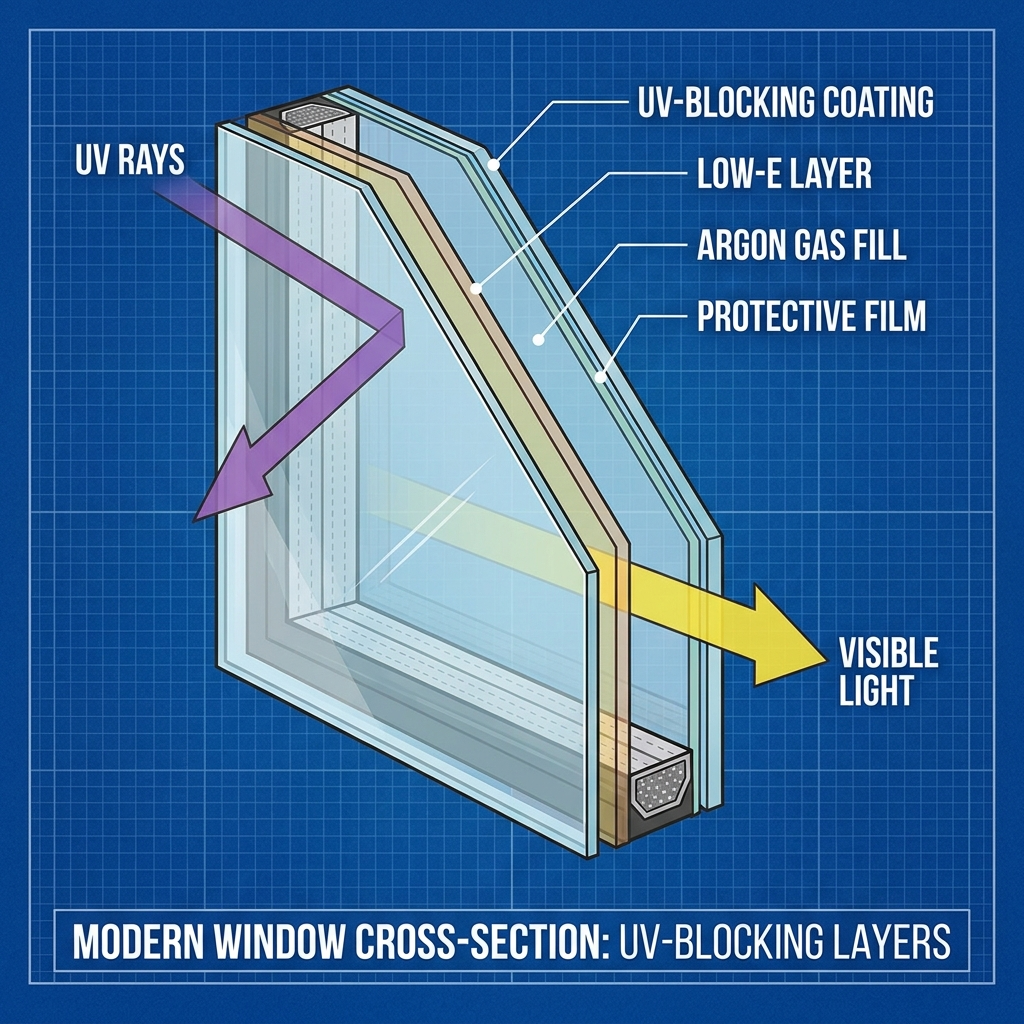
Laminated glass is constructed by bonding two or more layers of glass with an interlayer of polyvinyl butyral (PVB) or ethylene-vinyl acetate (EVA). This interlayer acts as a built-in UV filter, absorbing up to 99% of UV radiation before it reaches interior surfaces.
2. Low-E (Low Emissivity) Coatings
Low-E coatings are microscopically thin metallic layers applied to the glass surface. These coatings reflect UV rays and infrared radiation while allowing visible light to pass. Depending on the specific coating, low-E glass can block over 95% of UV radiation.
3. UV-Blocking Films and Tints
Installing aftermarket UV-protective films or tints is another option. These films incorporate UV-absorbing materials that adhere to existing windows and dramatically reduce UV transmission. They are often used in commercial buildings and older homes for retrofitting.
Benefits of New Windows for Interior Protection
In addition to reducing UV damage to floors and furniture, modern windows offer numerous other advantages:
- Preservation of Color and Material Integrity: By blocking harmful UV rays, furniture upholstery, hardwood floors, and artwork maintain their original appearance longer.
- Energy Efficiency: Many UV-blocking windows also contribute to better insulation, lowering heating and cooling costs.
- Comfort: Reduced fading often correlates with diminished heat gain, enhancing indoor comfort levels.
- Reduced Health Risks: Blocking UV rays indoors also protects occupants from skin damage and other UV-related health concerns.
Scientific Evidence on UV Protection
“Studies confirm that windows with laminated glass or high-performance low-E coatings can decrease UV transmission by more than 90%, substantially reducing the fading rates of interior products compared to conventional glass.” – Journal of Building Physics, 2022
How to Choose Windows that Protect Against UV Damage
When selecting windows to safeguard your interiors, consider these key factors:
1. UV Blocking Rating
Look for windows with documented UV transmittance below 5%, preferably under 1% for the highest protection. Manufacturers often specify these numbers in product specifications.
2. Visible Light Transmission
Ensure that UV-blocking does not drastically reduce visible light, as natural light is important for ambiance and wellbeing.
3. Overall Solar Heat Gain Coefficient (SHGC)
This rating indicates how much solar heat passes through the glass. Lower SHGC values typically mean better UV and heat blocking but may also reduce daylighting.
4. Installation Quality
Proper installation is critical to ensure window functionality and maximize UV protection benefits. Consult certified window professionals to avoid performance gaps.
- Verify manufacturer certifications and warranties for UV protection.
- Consider double-glazing or triple-glazing options for enhanced performance.
- Evaluate compatibility with existing window frames and architectural style.
Additional Strategies to Complement Window Protection
Even with advanced windows, combining multiple methods provides the strongest defense for your interiors:
- Use of UV-resistant window treatments: Curtains, blinds, and shades made from UV-blocking fabrics add an extra layer of protection.
- Strategic interior layout: Position valuable furniture and artwork away from direct sun exposure when possible.
- Periodic Maintenance: Regular cleaning and inspection of windows and treatments maintain their protective efficacy.
Conclusion
The damage caused by UV radiation can significantly diminish the beauty and lifespan of floors and furniture. However, today’s new window technologies offer powerful solutions to mitigate these effects. Whether it’s laminated glass, low-E coatings, or UV-blocking films, selecting the right window system can protect your interiors from unwanted fading and degradation while enhancing overall energy efficiency and comfort indoors. For homeowners and businesses alike, investing in modern UV-protective windows is a smart strategy to preserve interior aesthetics, save on restoration costs, and create a healthier living environment.