
When shopping for replacement windows, homeowners often see labels and ratings that can be confusing at first glance. One of the most important standards used to measure window performance is the NFRC rating. For homeowners looking to improve comfort, reduce energy costs, and increase the value of their home, understanding these ratings can help you make a more informed decision.
At Viviano Windows, we help customers choose window systems that not only look great but also perform efficiently in real-world conditions.
What Are NFRC Ratings?
The National Fenestration Rating Council (NFRC) is an independent organization that evaluates and certifies the energy performance of windows, doors, and skylights. Their standardized testing ensures homeowners can compare products from different manufacturers fairly.
NFRC ratings appear on window labels and measure several key performance factors related to energy efficiency.
NFRC ratings provide an objective way to compare window energy performance, helping homeowners choose products that can reduce energy consumption and improve indoor comfort year-round.
The Main NFRC Rating Categories
NFRC labels typically include several measurements that describe how a window performs in different environmental conditions.
1. U-Factor
The U-Factor measures how well a window prevents heat from escaping.
Lower numbers mean better insulation.
Key points about U-Factor:
-
Indicates how much heat transfers through the window
-
Lower values mean better energy efficiency
-
Especially important in colder climates
-
Helps reduce heating costs in winter
For example, a window with a U-Factor of 0.25 will insulate better than one with 0.35.
2. Solar Heat Gain Coefficient (SHGC)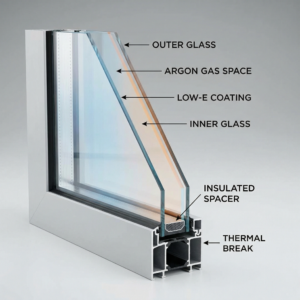
The Solar Heat Gain Coefficient measures how much solar heat enters through the window.
Important characteristics of SHGC include:
-
Lower SHGC reduces heat gain from sunlight
-
Higher SHGC allows more passive solar heating
-
Important for controlling summer cooling costs
-
Helpful for reducing indoor temperature fluctuations
Homes in warmer climates usually benefit from lower SHGC ratings to minimize cooling loads.
3. Visible Transmittance (VT)
Visible Transmittance measures how much natural light passes through the window.
Benefits of higher VT ratings:
-
Brighter indoor spaces
-
Reduced need for artificial lighting
-
Improved visibility and clarity
-
Enhanced interior aesthetics
A window with higher VT allows more daylight into the home without sacrificing efficiency.
4. Air Leakage (AL)
Air Leakage measures how much outside air passes through joints in the window.
Lower air leakage ratings help:
-
Reduce drafts
-
Improve indoor comfort
-
Maintain consistent indoor temperatures
-
Prevent energy loss
Quality window installation plays a major role in minimizing air leakage.
5. Condensation Resistance (CR)
Condensation Resistance evaluates how well a window resists moisture buildup on interior surfaces.
Benefits of higher CR ratings include:
-
Reduced condensation on glass
-
Lower risk of mold or moisture damage
-
Improved indoor air quality
-
Better long-term window performance
This rating is especially useful in homes with high humidity levels.
Why NFRC Ratings Matter for Homeowners
Choosing windows based on NFRC ratings helps homeowners understand how their investment will perform over time.
Energy-efficient windows can provide several advantages:
-
Lower heating and cooling costs
-
More consistent indoor temperatures
-
Increased home comfort
-
Reduced environmental impact
-
Improved home resale value
For homes in the Midwest, where temperatures can vary dramatically between seasons, selecting the right combination of NFRC ratings is particularly important.
Features That Improve NFRC Performance
Modern window technology includes several features that help improve NFRC ratings.
Common energy-efficient upgrades include:
-
Low-E glass coatings that reflect heat
-
Double or triple pane glass
-
Argon or krypton gas fills
-
Insulated window frames
-
Warm-edge spacers
These features work together to create a window system that performs better in both hot and cold weather.
Choosing the Right Windows for Your Home
Not all homes require the exact same window specifications. The ideal NFRC rating combination depends on several factors:
-
Local climate conditions
-
Home orientation and sun exposure
-
Existing insulation levels
-
Window size and placement
-
Personal comfort preferences
A professional window installer can help evaluate your home and recommend the best options.
Professional Installation Makes a Difference
Even the highest-rated windows can underperform if they are installed incorrectly. Proper installation ensures the window system maintains its tested efficiency.
At Viviano Windows, our experienced team ensures every window is installed properly to maximize performance, durability, and energy savings.
By combining quality materials with professional installation, homeowners can enjoy improved comfort and efficiency for years to come.
Please Call For Complete Details of All Sales